
Emergency Medical Services (EMS) represent a critical link in the chain of survival, bridging the gap between life-threatening emergencies and definitive medical care. From the initial 911 call to the arrival at the hospital, EMS professionals provide vital interventions, often under immense pressure and challenging circumstances. This overview explores the multifaceted world of EMS, encompassing its structure, technology, response protocols, training, and integration within the broader healthcare system.
Understanding the intricate workings of EMS is crucial for appreciating the dedication and skill of its personnel, as well as the technological advancements that continuously enhance their capabilities. This exploration will delve into the various roles within an EMS system, the life-saving equipment employed, and the ongoing efforts to improve pre-hospital care and patient outcomes.
EMS Response and Patient Care
Effective emergency medical services (EMS) are crucial for timely and appropriate care, significantly impacting patient outcomes. Rapid response, accurate assessment, and safe transport are fundamental components of successful EMS operations. This section details common emergency scenarios, patient assessment and stabilization procedures, and patient transport protocols.
Common Emergency Situations Requiring EMS Intervention
EMS teams respond to a wide variety of emergencies. Examples include traumatic injuries (such as motor vehicle collisions, falls, and penetrating wounds), cardiac arrest, stroke, respiratory distress, severe allergic reactions (anaphylaxis), and acute poisoning. Each scenario demands a unique approach, emphasizing rapid assessment and immediate intervention. The severity and complexity of the situation dictate the level of care required and the resources deployed.
Assessing and Stabilizing Patients in Various Emergency Scenarios
The initial assessment of a patient involves a systematic approach to identify and address life-threatening conditions. This often follows the ABCDE approach: Airway, Breathing, Circulation, Disability (neurological status), and Exposure (environmental factors). In trauma cases, controlling bleeding and immobilizing injuries are priorities. For cardiac arrest, immediate CPR and defibrillation are crucial. In stroke cases, rapid assessment to determine the type of stroke and initiation of appropriate treatment are paramount.
Stabilization involves managing vital signs, providing oxygen, and administering medications as needed.
Protocols for Safe and Efficient Patient Transport
Safe and efficient patient transport is essential to ensure patient well-being and minimize further complications. This involves selecting the appropriate mode of transport based on the patient’s condition, the distance to the hospital, and available resources. Patients requiring advanced life support (ALS) often necessitate transport via ambulances equipped with advanced medical equipment and trained personnel. Patients with less critical conditions might be transported by basic life support (BLS) ambulances or other means, such as ground or air emergency medical services.
During transport, continuous monitoring of vital signs and provision of appropriate medical care are essential.
Comparison of Patient Transport Methods
| Transport Method | Distance Suitability | Patient Condition Suitability | Resource Requirements |
|---|---|---|---|
| Ground Ambulance (ALS) | Variable, generally shorter distances | Critical and unstable patients requiring advanced life support | Highly trained personnel, advanced medical equipment, ambulance |
| Ground Ambulance (BLS) | Shorter distances | Stable patients requiring basic life support | Trained personnel, basic medical equipment, ambulance |
| Air Ambulance (Helicopter) | Long distances, difficult terrain | Critical and unstable patients requiring rapid transport | Highly trained personnel, advanced medical equipment, helicopter, landing zone |
| Private Vehicle (with EMS escort) | Short distances, stable patients | Stable patients with minor injuries | Limited resources, may require EMS escort for monitoring |
EMS Training and Education
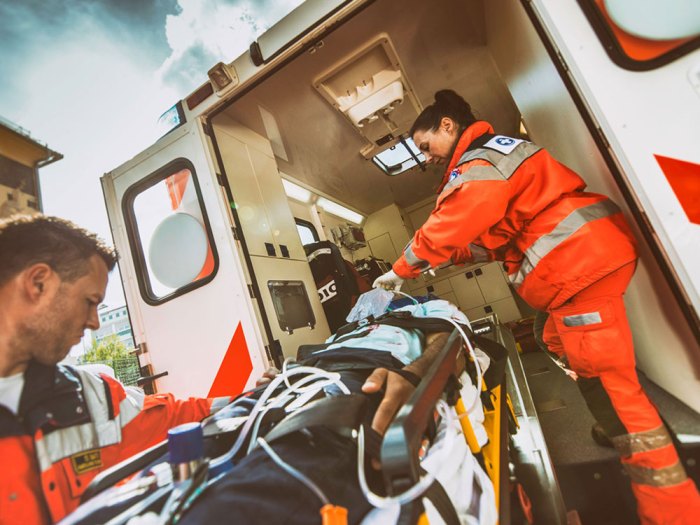
Effective Emergency Medical Services (EMS) rely heavily on the training and education of its personnel. A robust and standardized training system ensures consistent, high-quality care across various locations and situations. This section will explore the key components of EMS training programs at different provider levels, highlighting the educational requirements and ongoing professional development opportunities.
EMS Provider Levels and Training Components
EMS training programs are structured into various provider levels, each with increasing responsibilities and advanced skills. The most common levels include Emergency Medical Responders (EMRs), Emergency Medical Technicians (EMTs), Advanced EMTs (AEMTs), and Paramedics. Each level builds upon the previous one, with progressively more complex medical and emergency care procedures taught. Key components typically include classroom instruction, hands-on skills training, simulated scenarios, and clinical rotations.
EMRs receive basic training in first aid and CPR, while Paramedics undergo extensive education covering advanced life support techniques, such as cardiac monitoring and medication administration.
EMT and Paramedic Educational Requirements: A Comparison
EMTs and Paramedics share some common ground in their training, such as basic anatomy and physiology, emergency medical care principles, and patient assessment techniques. However, their educational requirements differ significantly in scope and depth. EMT programs generally require a shorter training duration (often several months), focusing on basic life support (BLS) skills. Paramedic programs, on the other hand, are considerably longer (typically one to two years), encompassing advanced life support (ALS) procedures and requiring a higher level of understanding of pharmacology, advanced airway management, and cardiac care.
Furthermore, Paramedics undergo more extensive clinical practice and often require an associate’s degree or higher.
Ongoing Professional Development in EMS
Continuous learning is crucial for EMS professionals to maintain their skills and knowledge in a constantly evolving medical landscape. Ongoing professional development opportunities include continuing education courses, conferences, workshops, and certifications in specialized areas like trauma care or pediatric emergencies. Many jurisdictions mandate continuing education credits to maintain licensure, ensuring that practitioners stay abreast of the latest advancements in medical technology and treatment protocols.
Examples of continuing education might include courses on the latest techniques in cardiac resuscitation, updates on medication protocols, or training on managing specific types of injuries.
Hypothetical EMT Training Program Curriculum
A comprehensive EMT training program typically consists of several key modules. This hypothetical curriculum illustrates the structure and learning objectives:
Module 1: Introduction to Emergency Medical Services
Learning Objectives
Understand the EMS system, roles and responsibilities of EMTs, legal and ethical considerations, and patient safety protocols.
Module 2: Patient Assessment and Management
Learning Objectives
Master the skills of scene safety, primary and secondary assessments, vital signs monitoring, and initial patient management.
Module 3: Medical Emergencies
Learning Objectives
Learn to recognize and manage various medical emergencies, including cardiac arrest, respiratory distress, and diabetic emergencies.
Module 4: Trauma Emergencies
Learning Objectives
Develop proficiency in assessing and managing traumatic injuries, including bleeding control, spinal immobilization, and wound care.
Module 5: Special Patient Populations
Learning Objectives
Understand the unique needs of pediatric, geriatric, and other special patient populations.
Module 6: Emergency Pharmacology and Medication Administration
Learning Objectives
Learn about basic medications used in EMS, their administration routes, and potential side effects.
Module 7: Practical Skills and Simulations
Learning Objectives
Develop proficiency in practical skills through hands-on training and realistic simulated scenarios. This includes airway management, IV insertion (where applicable), and other procedures.
Medical Devices in EMS
Effective emergency medical services (EMS) rely heavily on a range of sophisticated medical devices to assess, stabilize, and treat patients in pre-hospital settings. These devices, when properly used and maintained, are critical for improving patient outcomes and ensuring the safety of both patients and EMS personnel. Their proper application requires significant training and ongoing competency assessment.
Commonly Used Medical Devices in EMS
The selection of medical devices carried by an EMS unit often depends on factors such as the level of service provided (Basic Life Support, Advanced Life Support, etc.) and local protocols. However, several devices are common across most EMS systems. The following are descriptions of their functionality and limitations:
- Automated External Defibrillator (AED): AEDs analyze the heart rhythm and deliver an electric shock (defibrillation) if a life-threatening arrhythmia, such as ventricular fibrillation or pulseless ventricular tachycardia, is detected. They are designed for ease of use by non-medical personnel, with voice prompts guiding the user through the process. Limitations include the inability to treat all cardiac emergencies and potential for inaccurate rhythm analysis in certain situations, such as when there is significant patient movement.
- Cardiac Monitor/Defibrillator (Combined Unit): These devices combine the functionality of a cardiac monitor (which displays the heart rhythm) and a defibrillator. They provide more detailed information about the patient’s heart rhythm than an AED, allowing for more sophisticated analysis and treatment options. Limitations include higher cost and greater complexity, requiring more advanced training to operate effectively.
- Oxygen Delivery Systems: Oxygen is crucial in many emergency situations. EMS uses various oxygen delivery systems, including nasal cannulas (low-flow oxygen), non-rebreather masks (high-flow oxygen), and bag-valve masks (manual ventilation with supplemental oxygen). Limitations include the potential for oxygen toxicity with high concentrations and the need for proper fitting and monitoring to ensure effective oxygen delivery.
- Suction Device: Suction devices are used to clear airways of fluids, blood, or vomit, which can obstruct breathing. They range from portable manual suction units to larger, more powerful electric suction units. Limitations include the potential for trauma to the airway if used improperly and the limited capacity of some smaller units.
- IV Infusion Pumps: These devices are used to administer intravenous fluids and medications at a controlled rate. They are essential for managing fluid balance, administering medications, and providing critical support to patients in shock or other critical conditions. Limitations include the potential for malfunction, the need for accurate programming, and the risk of infiltration (fluid leaking into surrounding tissue).
AEDs versus Manual Defibrillators
Automated External Defibrillators (AEDs) are designed for simplicity and ease of use by lay rescuers, providing voice prompts to guide users through the defibrillation process. Manual defibrillators offer more control and advanced features, such as pacing capabilities and the ability to deliver different types of shocks, but require specialized training to operate effectively. While AEDs are excellent for rapid defibrillation in emergency situations where trained personnel may not be immediately available, manual defibrillators are preferred in situations requiring more advanced cardiac management by trained professionals.
The choice depends on the situation, personnel skills, and available resources.
Maintenance and Quality Control Procedures for Medical Devices
Regular maintenance and quality control are crucial to ensure the reliability and safety of EMS medical devices. Procedures typically include:
- Regular inspections: Visual inspection for damage, loose connections, or signs of wear and tear.
- Functional testing: Regular testing of all functions to ensure proper operation (e.g., testing AED self-tests, checking battery levels, verifying suction device functionality).
- Calibration: Periodic calibration of devices such as blood pressure monitors and infusion pumps to ensure accuracy.
- Preventative maintenance: Following manufacturer’s recommendations for cleaning, disinfection, and replacement of parts.
- Documentation: Maintaining detailed records of all inspections, tests, and maintenance activities.
- Training: Ongoing training for EMS personnel on the proper use and maintenance of all medical devices.
Medical Services Related to EMS
Emergency Medical Services (EMS) are inextricably linked to the broader healthcare system, particularly hospital services. The effectiveness of EMS relies heavily on seamless integration with these facilities, ensuring a continuous and high-quality care pathway for patients. This integration involves efficient handoffs, access to specialized care, and a collaborative approach to managing emergencies.Efficient communication and coordination between EMS personnel and hospital staff are crucial for optimal patient outcomes.
The nature of this interaction dictates the success of the entire emergency response chain.
Emergency Department and Trauma Center Interactions
Emergency departments (EDs) and trauma centers are the primary hospital destinations for patients transported by EMS. The ED provides immediate stabilization and assessment, while trauma centers specialize in managing severe injuries. EMS personnel provide a critical initial assessment and treatment, including stabilization of vital signs and management of life-threatening conditions, before transferring the patient to the hospital. This pre-hospital care significantly impacts the patient’s condition upon arrival at the ED or trauma center, improving the chances of a positive outcome.
Effective communication during the transfer process, including providing a concise and comprehensive patient report, is vital for efficient and effective hospital care. For example, a clear description of the mechanism of injury, vital signs trends, and any interventions performed en route, allows the hospital team to immediately prioritize care.
Efficient Handoff Procedures Between EMS and Hospital Staff
Efficient handoff procedures are paramount for ensuring continuity of care. These procedures typically involve a verbal report from the EMS provider to the ED physician or nurse, encompassing the patient’s history, assessment findings, treatment provided, and ongoing needs. A standardized reporting system, such as the SBAR (Situation, Background, Assessment, Recommendation) method, can improve clarity and reduce the risk of critical information being missed.
Effective handoff also includes the physical transfer of the patient, ensuring safe and appropriate handling, and the transfer of medical records and other relevant documentation. Timely and clear communication during this process minimizes delays in treatment and improves overall patient outcomes. Delays in handoff, on the other hand, can lead to adverse events and compromise patient safety.
A well-rehearsed handoff procedure, involving a dedicated space and a standardized protocol, minimizes confusion and ensures the patient receives prompt and appropriate care.
EMS and Access to Specialized Medical Services in Underserved Areas
EMS plays a vital role in bridging the gap in access to specialized medical care, particularly for patients in remote or underserved areas. By providing rapid transport to hospitals equipped with specialized resources, EMS helps overcome geographical barriers and ensures timely access to critical care. This is especially crucial for time-sensitive conditions such as stroke, heart attack, and trauma.
For example, a rural community might not have an on-site neurosurgeon; however, the rapid transport provided by EMS can ensure a patient with a stroke reaches a specialized stroke center in a timely manner, improving their chances of recovery. Furthermore, EMS can also provide some basic interventions, such as administering thrombolytic medications for stroke or performing advanced cardiac life support, potentially improving the patient’s condition before arrival at the hospital.
The integration of telehealth technology with EMS further enhances access to specialized services, allowing remote consultation with specialists and improving the quality of pre-hospital care in underserved areas.
In conclusion, Emergency Medical Services are an indispensable component of modern healthcare, providing rapid, effective, and often life-saving interventions in critical situations. The continuous evolution of EMS, driven by technological advancements, refined training protocols, and ongoing research, ensures that pre-hospital care remains at the forefront of medical innovation. The seamless integration of EMS with hospitals and other healthcare providers underscores its crucial role in improving patient outcomes and public health.
FAQ Compilation
What is the difference between an EMT and a Paramedic?
EMTs provide basic life support, while Paramedics offer advanced life support, including administering medications and performing more complex procedures.
How long does it take for EMS to respond to an emergency?
Response times vary greatly depending on location, traffic, and the availability of resources. Urban areas generally have faster response times than rural areas.
What should I do if I witness a medical emergency?
Call emergency services immediately, provide basic first aid if you are trained and comfortable doing so, and follow the dispatcher’s instructions.
How is EMS funded?
Funding sources vary widely depending on the region, and often include government funding, taxes, and private insurance reimbursements.
Are there volunteer EMS services?
Yes, many communities rely on volunteer EMS services, especially in rural areas. These services are vital for providing timely care in areas with limited resources.


