Medical research careers offer a diverse and intellectually stimulating path for individuals passionate about advancing healthcare. From unraveling the mysteries of disease to developing life-saving treatments, researchers play a crucial role in shaping the future of medicine. This exploration delves into the various specializations, educational pathways, and career trajectories within this dynamic field, highlighting both the challenges and the immense rewards.
The field encompasses a wide spectrum of roles, from bench scientists conducting fundamental research to clinicians conducting clinical trials and policy experts shaping healthcare regulations. Understanding the different types of research, the settings in which it’s conducted, and the essential skills required for success are key to navigating this complex yet rewarding landscape. This overview aims to provide a clear and comprehensive understanding of the possibilities available within medical research careers.
Essential Skills for Medical Research Careers
A successful career in medical research demands a diverse skillset, encompassing both technical proficiency and strong interpersonal abilities. Researchers must be adept at handling complex data, performing intricate experiments, and communicating their findings effectively. Equally crucial are the softer skills that facilitate collaboration, problem-solving, and critical evaluation. This section details the essential skills, both hard and soft, necessary for thriving in this dynamic field.
Medical research is a multifaceted endeavor requiring a blend of technical expertise and interpersonal skills. The ability to perform laboratory procedures, analyze data, and write compelling scientific reports is as vital as the capacity to work effectively in teams, communicate clearly, and think critically. The following sections elaborate on these key skill areas.
Technical Skills in Medical Research
Several technical skills are foundational to success in medical research. Proficiency in these areas allows researchers to design, conduct, and interpret experiments accurately and efficiently. These skills are often honed through formal education and hands-on experience.
- Data Analysis: Researchers frequently collect large datasets requiring statistical analysis to identify trends, draw conclusions, and support hypotheses. Familiarity with statistical software packages (e.g., SPSS, R, SAS) and appropriate statistical tests is essential. For instance, a researcher studying the efficacy of a new drug would use statistical methods to compare treatment and control groups, determining if the drug significantly improved patient outcomes.
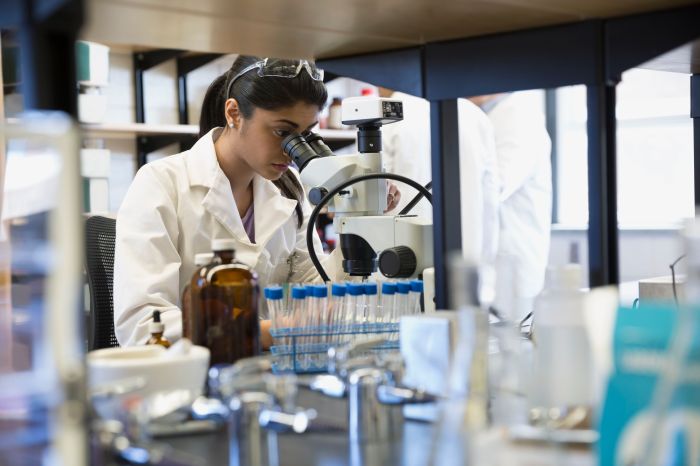
- Laboratory Techniques: Many research projects involve hands-on laboratory work, requiring expertise in various techniques such as cell culture, molecular biology (PCR, Western blotting), and microscopy. A researcher studying infectious diseases might utilize cell culture techniques to grow and study pathogens, or employ PCR to detect specific viral DNA sequences.
- Scientific Writing: The ability to communicate research findings clearly and concisely through scientific writing is paramount. Researchers must be able to write grant proposals, research papers, and presentations, adhering to specific formatting and stylistic guidelines. For example, a researcher submitting a manuscript to a peer-reviewed journal needs to follow strict guidelines on structure, referencing, and data presentation.
Essential Soft Skills for Medical Research
While technical skills are crucial, soft skills are equally important for effective collaboration and project success. These interpersonal and cognitive abilities enhance a researcher’s ability to navigate the complexities of the research environment.
- Teamwork: Most research projects involve collaborative efforts, requiring researchers to work effectively with colleagues from diverse backgrounds. Effective communication and mutual respect are vital for achieving shared goals.
- Communication: Researchers must communicate effectively both orally and in writing. This includes presenting research findings at conferences, writing reports, and collaborating with colleagues and supervisors.
- Problem-Solving: Research often involves unexpected challenges and setbacks. The ability to identify problems, analyze potential solutions, and implement effective strategies is crucial for project success. For example, a researcher encountering unexpected results might need to troubleshoot their experimental design or analyze data in a different way.
- Critical Thinking: Researchers must be able to critically evaluate data, identify biases, and draw logical conclusions. This involves questioning assumptions, considering alternative explanations, and formulating well-supported arguments.
Application of Skills in a Real-World Medical Research Project
The skills Artikeld above are intricately interwoven in a real-world medical research project. Consider a hypothetical study investigating the effectiveness of a new cancer treatment:
- Data Analysis: Statistical analysis would be used to compare survival rates and other relevant outcomes between patients receiving the new treatment and a control group.
- Laboratory Techniques: Researchers might use cell culture to test the drug’s effects on cancer cells in vitro, or conduct animal studies to assess its efficacy and safety in vivo.
- Scientific Writing: The results would be written up in a scientific paper, submitted to a peer-reviewed journal, and presented at conferences.
- Teamwork: The project would involve collaboration among clinicians, laboratory technicians, statisticians, and other research personnel.
- Communication: Effective communication would be crucial for coordinating the various aspects of the project and disseminating the findings to the scientific community and the public.
- Problem-Solving: Researchers might encounter unexpected challenges, such as difficulties in recruiting participants or unexpected results, requiring creative problem-solving skills.
- Critical Thinking: Researchers would need to critically evaluate their data, considering potential biases and alternative explanations for their findings.
Medical Research and Medical Services

Medical research and medical services are inextricably linked; advancements in one directly influence the other. Medical research provides the foundation for improved diagnostic tools, treatments, and preventative measures, ultimately shaping the landscape of healthcare services. The translation of research findings into practical applications is a crucial process that continually enhances the quality and effectiveness of medical care.The relationship between medical research and medical services is a dynamic interplay.
Research generates new knowledge and technologies, which are then implemented in clinical settings to improve patient outcomes. This continuous cycle of discovery and application is essential for progress in medicine. The speed and efficiency of this translation vary depending on factors such as the complexity of the research, regulatory approvals, and resource availability.
Examples of Research Impacting Medical Services
Breakthroughs in medical research have revolutionized healthcare. For instance, the discovery of the structure of DNA paved the way for genetic testing and personalized medicine, allowing for targeted treatments based on individual genetic profiles. This has significantly improved the effectiveness of cancer therapies, for example, leading to higher survival rates and improved quality of life for patients. Another example is the development of antibiotics, a direct result of microbiological research, which has dramatically reduced mortality rates from infectious diseases.
Before the widespread use of antibiotics, infections that are now easily treatable were often fatal. The development of vaccines, stemming from immunological research, has eradicated or significantly reduced the incidence of previously devastating diseases like polio and measles. These are just a few examples demonstrating the profound impact of research on the provision of effective medical services.
Translating Research Findings into Practice
The translation of research findings into practical applications in healthcare involves a multi-stage process. It begins with basic research, which expands our fundamental understanding of biological processes and diseases. This is followed by pre-clinical research, often involving animal models, to test the safety and efficacy of new treatments or technologies. Clinical trials then rigorously evaluate the intervention in human subjects, ensuring both safety and effectiveness before regulatory approval.
Finally, the new treatment or technology is implemented in clinical practice, often requiring training for healthcare professionals and the development of supportive infrastructure. This complex process highlights the collaborative effort required to successfully translate research discoveries into tangible improvements in medical services. The time taken for this translation can vary considerably, from a few years for some innovations to decades for others, depending on the complexity of the research and the regulatory hurdles involved.
Challenges and Opportunities in Medical Research Careers
A career in medical research, while intellectually stimulating and impactful, presents a unique set of hurdles and exciting prospects. The field is characterized by intense competition, demanding workloads, and the constant pressure to secure funding. However, advancements in technology and a growing global need for medical solutions are creating new and expanding opportunities for researchers.
Funding Limitations in Medical Research
Securing adequate funding is a persistent challenge for medical researchers. Grant applications are highly competitive, with success rates often low. This funding scarcity can limit the scope of research projects, delay progress, and even force promising studies to be abandoned. The reliance on external funding sources, such as government grants and private philanthropy, creates inherent instability. For example, shifts in government priorities or economic downturns can dramatically impact funding availability, leading to project delays or cancellations.
This precarious financial landscape necessitates researchers to develop strong grant writing skills and explore diverse funding streams.
Ethical Considerations in Medical Research
Ethical dilemmas are an unavoidable aspect of medical research. Balancing the potential benefits of new treatments or interventions with the risks to participants requires careful consideration. Informed consent, data privacy, and the equitable distribution of research benefits are crucial ethical considerations. For instance, clinical trials involving vulnerable populations raise complex ethical questions about informed consent and the potential for exploitation.
Furthermore, the use of artificial intelligence in medical research presents new ethical challenges related to data bias and algorithmic transparency. Robust ethical review processes and ongoing dialogue are essential to navigate these complexities.
Intense Competition within Medical Research
The medical research field is highly competitive, with a large pool of talented researchers vying for limited resources and prestigious positions. Securing publications in high-impact journals, obtaining grants, and securing academic appointments all involve intense competition. This pressure can lead to burnout and a potentially unhealthy focus on publishing rather than conducting high-quality research. The constant pursuit of recognition and advancement necessitates researchers to build strong networks, cultivate collaboration, and develop exceptional communication skills.
Emerging Opportunities and Growth Areas in Medical Research
Despite the challenges, the field of medical research is experiencing significant growth and expansion. Advances in genomics, personalized medicine, and artificial intelligence are opening new avenues for discovery and innovation. The increasing prevalence of chronic diseases, an aging global population, and the emergence of novel infectious diseases are driving demand for medical research solutions. For example, the development of CRISPR-Cas9 gene editing technology has revolutionized genetic research, creating opportunities to cure previously incurable diseases.
Similarly, the application of artificial intelligence in drug discovery and diagnostics is accelerating the pace of medical innovation.
Potential Solutions to Address Challenges in Medical Research
The challenges Artikeld above can be addressed through several strategic approaches:
- Increased and more stable government funding for medical research, coupled with streamlined grant application processes.
- Development of robust and accessible ethical guidelines and review boards, ensuring transparency and accountability in research practices.
- Promotion of interdisciplinary collaborations and mentorship programs to foster a supportive and collaborative research environment.
- Incentivizing research focusing on unmet medical needs in underserved populations.
- Implementation of comprehensive training programs that equip researchers with strong grant writing, communication, and project management skills.
In conclusion, a career in medical research presents a unique blend of intellectual challenge and societal impact. While the path may be demanding, requiring dedication, perseverance, and a commitment to continuous learning, the potential to contribute to groundbreaking advancements in healthcare makes it a profoundly rewarding pursuit. The opportunities for growth, specialization, and collaboration within diverse settings ensure a dynamic and constantly evolving career landscape for those passionate about improving human health.
User Queries
What is the average salary for medical researchers?
Salaries vary widely depending on experience, education, specialization, and employer. However, it’s generally a well-compensated field with competitive salaries.
What are the job prospects in medical research?
The job market for medical researchers is competitive but generally strong, with consistent demand driven by ongoing advancements in healthcare and medical technology.
Is a PhD required for all medical research roles?
No, while a PhD is often required for independent research positions, many roles, particularly those involving support or collaboration, may only require a Master’s degree or even a Bachelor’s degree depending on the specific responsibilities.
How can I gain experience in medical research before pursuing a career?
Consider volunteering in research labs, undertaking internships, or participating in research projects during your undergraduate studies to gain valuable experience and build your network.


